

Valkollen: From Borlänge to Järva: How a Single Fraud Investigation Became a Claim About Sweden's Whole Election
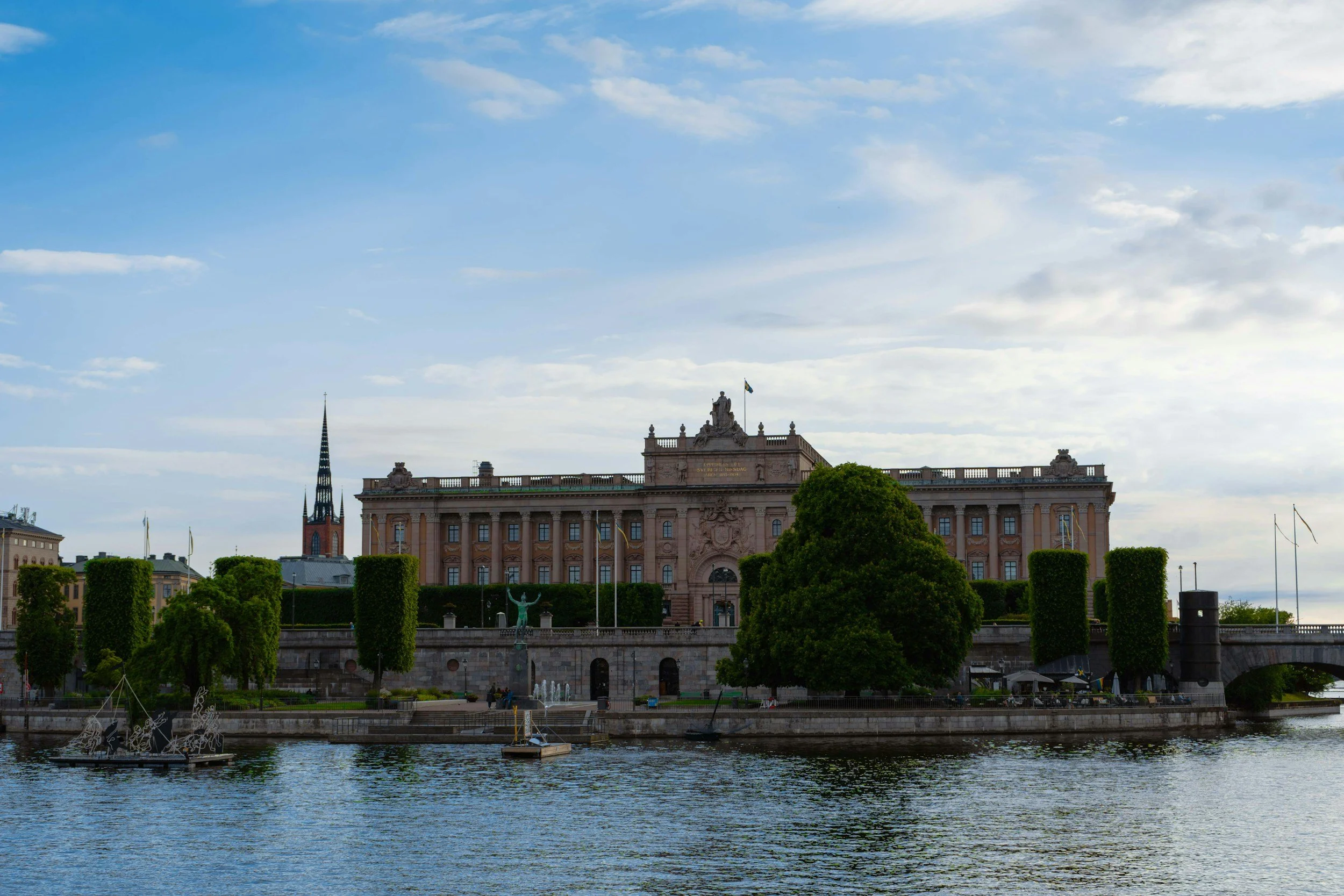
Sveriges Riksdag
Two weeks after Sweden's general election on 13 September, "Sweden has fallen" has become international shorthand for the result. At Revontulet, we have been monitoring the Swedish election information environment as part of Valkollen, a collaboration with the Fojo Media Institute at the Linnaeus University since June. In Swedish, the phrase hardly appears: from the 1st to the 28th of September, "Sverige är förlorat", "Sweden has fallen," and twelve similar phrasings appear in only 63 of 91,424 posts, comments, and articles in our Swedish collection (0.07%). Every figure in this piece comes from our Swedish collection (Arabic-language search terms in the monitoring project are excluded here).
Still, the narrative is there, and in international discourse the claim that "Sweden has fallen" has grown exponentially since the election. The Swedish Defence Research Agency (FOI) warns that the current narratives on election fraud and misconduct in Sweden can be used by foreign actors , and they assume that Russia will use the situation for its benefit.
In Sweden, it travels under other words. We've identified six stages and four vocabularies carrying the narrative over the past two weeks. What began as an argument about naturalized voters became, through a preliminary investigation in Borlänge, a claim about which Swedish votes count.
What is established
After the vote count concluded on the 18th of September, Mohamed Abdukardir Ali of Vänsterpartiet entered the Riksdag from ninth place on the party's Dalarna list. He received 648 personal votes, moving ahead of list leader Kajsa Fredholm ( SVT ). On September 21st, Expressen reported that the National Anti-Corruption Unit (Riksenheten mot korruption) was investigating suspected otillbörligt verkande vid röstning (improper influence on voting) in Borlänge. Prosecutor Oskar Edvardsson told SVT that an investigation opened during the campaign had been closed and was reopened on new information.
According to SVT's summary of the case , last updated on September 25th as of writing, three people are suspected, none has been formally notified of suspicion, and their identities are confidential. No outlet has reported Ali as one of the three, and he denies involvement. On 22 September, V party secretary Maria Forsberg announced that Ali would not serve from the start of the term while the investigation runs. As of 28 September, that is where the case stands: one reopened preliminary investigation in one municipality, with no one formally charged.
Stage 1: imported voters, before Borlänge
The first post-election argument was about demography, not fraud: that citizens naturalized in the last term decided the result. References to "200 000" new citizens and to "importerade väljare" appear in 76 items in the period following the 10th of September, peaking on the 15th and 18th of September and fading again after the 20th of September.
The same day, the 14th of September, Kent Ekeroth, Sverigedemokraterna's lead candidate for the Dalarna regional election, spoke in a live interview on P4 Dalarna of "röstboskap från utlandet", voting cattle from abroad ( Dala-Demokraten ). A local politician from another party reported him to the police for hets mot folkgrupp ( Sveriges Radio ). Zeth Isaksson of Stockholm University described the idea of imported voters as an old one on the radical right ( Dagens ETC ) and Ekeroth's remarks as anti-democratic ( Sveriges Radio ). In our collection, "röstboskap" and "valboskap", both among our search terms, rose from 244 of 5,680 collected items (4.3%) on the 13th of September to 507 of 4,545 (11.2%) on the 14th of September.
English-language content also appears at this stage. American commentator Joey Mannarino posted that "Sweden is the first country to fall because of immigration"; Dutch activist Eva Vlaardingerbroek and British activist Tommy Robinson posted in the same vein. By this time, the international dissemination focused on how immigrations or muslims had decided the vote. Imtiaz Mahmood stated that " The left imported the victory, " and the account Politicalawake claimed that the 200,000 new citizens during the Tidö-governments term were the reason for their loss in the election. The claim that 200,000 immigrant voters decided the vote was originally shared by SD politician Tobias Andersson on September 14. It is based on the premise that immigrants vote more favorably for the left. SVT Verify began investigating the claim and concluded that while possible, there are several uncertainties about the conclusion. It is not possible to know how all those individuals voted, or if they voted at all. Experts talking to SVT Verify stated that the figure "Is merely a hypothesis; nothing that can currently be empirically verified" Our collection runs on Swedish-language terms and does not measure that wave, so we describe it rather than count it.
Stage 2: the frame arrives before the allegation
On the 20th of September, a day before any investigation became public, the most-shared post in our collection naming Ali called him "klan-kryssad", voted in by clan, and another applied "röstboskap" to his election, six days after the word was broadcast in the same region. That day, klanröstning (clan voting) appeared in 34 of 1,397 analyzed items (2.4%). The clan-voting frame was already attached to Ali when the fraud allegation became public.
From röstboskap to klanröstning, share of items in our Swedish collection per day. "Röstboskap" and "valboskap" peaked on the 20th of September, the day before the investigation was reported; "klanröstning" peaked on the 24th.
Stage 3: the case breaks
On the 21st of September, the Borlänge case reached 758 of 4,854 items in our Swedish collection (15.6%), its peak. The chart below tracks the case and the clan-voting frame side by side. The case peaks first; the frame peaks three days later.
The Borlänge case and klanröstning, share of items in our Swedish collection per day. Figures in the text are as of 28 September.
Stage 4: from one case to a description of the vote
On the 22nd of September, reporting named a second Vänsterpartiet politician of Somali background in Borlänge in connection with the same investigation, and clan voting claims rose with it: 243 of 7,274 items (3.3%) that day and 249 of 6,554 (3.8%) the next.
On the 24th of September, Peter Wennblad's signed editorial in Svenska Dagbladet relayed testimony from anonymous polling staff in Rinkeby, Tensta and Husby. The one on-record source, Eva Debels, head of the secretariat at Stockholm's election board, is quoted as saying that Vänsterpartiet candidate Ilyas Hassan's personal-vote campaign "went overboard". According to the conservative online newspaper Bulletin's account of the piece , Vänsterpartiet called it an insinuation built on anonymous sources, and no investigation into Järva has been reported. Clan voting peaked that day at 1,054 of 8,814 items (12.0%); 767 of them were reposts of a single post by Wennblad, by different accounts. Items on Järva itself, naming Ilyas Hassan or mentioning Rinkeby, Tensta, Husby or Järva together with polling staff, fraud or pre-marked ballots, went from 9 of 6,554 (0.1%) on the 23rd of September to 1,620 of 8,814 (18.4%) on the 24th.
From the 21st to the 28th of September, 40 of 509 distinct clan-voting texts (7.9%) mention Ali or Borlänge. The rest describe the election as a whole. References to Somali Swedes rose from 181 items between the 1st and 20th of September to 2,445 items between the 21st and 28th of September. In that set, posts move from named politicians to a population group.
Follow-on stories, share of items in our Swedish collection per day: items naming the second Borlänge politician; items on Järva (Ilyas Hassan, or Järva districts with polling-staff, fraud or pre-marked-ballot terms); references to Somali Swedes.
Stage 5: the demand for a re-run
Mentions of nyval or omval, (for or against), rose from 335 items between the 1st and 20th of September to 1,370 between the 21st and 28th of September, peaking on the 25th of September at 290 of 7,504 (3.9%). The most-shared post that day came from former Riksdag member Hanif Bali: "Sverige har aldrig haft ett omval till riksdagen pga valfusk". Omval2026.se, a petition site run by the conservative think tank Oikos, was registered on 21 September, the day the Borlänge story broke. Omval2026.se currently has 27075 signatures, and is the second initative demanding a new election. Ettfolk.se, was created on September 17 and lets visitors sign a petition for a re-election, currently 160 597 signatures. The website also lets visitors report cases of suspected electoral misconduct, currently numbering 770, and collects reports from the municipalities and other cases of claimed electoral misconduct.
Reports on incidents related to the Swedish election to the Swedish Election Authority have increased sharply this year, with 15 000 appeals so far . During the last peak in 2018, the appeals amounted to 700 cases. However, many of the appeals are unspecific and not detailed cases. Emma Ricknell, senior lecturer in political science at Linnaeus University, has followed the online discussions and commented on the numbers, saying: "I haven’t seen this sort of digital activism or mobilisation before. Of course, we’ve had discussions, but not on this scale, and certainly not ones that have resulted in so many appeals."
The case also picked up international labels. "Somaligate", borrowed from the American "Somalia Gate", and comparisons with Minnesota appear in Swedish posts from the 19th of September. English-language accounts, among them Visegrád 24, claimed a Dalarna re-run could flip two seats and the national majority. Visigrád 24 has posted continuously about the post-election situation in Sweden, and while their posts themselves read like news, the Sweden has fallen narrative is highly present in the comment sections, with heavy amounts of racism about Somalis , drawing parallels between the events in Minnesota and the Swedish election.
Re-run talk (any stance), the "200 000 / imported voters" argument and "Sweden has fallen" phrasing, share of items in our Swedish collection per day.
Stage 6: Järva and the coverage
By the 26th of September, the Järva storyline had overtaken Borlänge, and the argument turned to the media. On the 27th of September, 941 of the 4,297 items in our Swedish collection (21.9%) concerned Järva. That is a higher share than on the 24th but from fewer items, because the collection as a whole was quieter. The most-shared items were a Wennblad follow-up about a polling worker who says they contacted Aftonbladet in August (577 reposts in our collection), criticism of public-service coverage by Tove Lifvendahl, political editor of Svenska Dagbladet (134), and a dispute over Vänsterpartiet's Ali Esbati answering Wennblad on SVT. The word klanröstning fell back below 1% while the claim it named carried on. Järva also gained international interest, and Peter of Sweden posted on September 25th , and Visegrád 24 posted on September 26th, about the new investigation into potential voter misconduct in the wider Stockholm area.
Across the six stages, the full sequence reads: a minority votes as a bloc, a party organized the bloc, the result may therefore not be legitimate, and the remedy is a new election or keeping that party out of government.
Who carried it
Sverigedemokraterna's documented role is early and local: its lead candidate in Dalarna put "röstboskap från utlandet" on regional radio a week before the Borlänge case, in the constituency where the case arose. The identifiable carriers of the later clan-voting frame in our collection are opinion pages and commentators: Svenska Dagbladet's, Expressen's and Bulletin's. We applied the same check to elected officials and party accounts of every party. None of the 25 most-reposted sources of clan-voting posts describes an elected or party role, and among the 1,652 accounts that posted or reposted clan-voting content we found one sitting Riksdag member: Nima Gholam Ali Pour (SD), who reposted a commentator's post using the term. Only about a fifth of these accounts have profile text in our collection, so these are the officials we can identify, not a full count.
What the law provides
Under the Elections Act , seats are divided among parties based on party votes; personal votes determine which of a party's candidates fill those seats. Ali's 648 personal votes did not give Vänsterpartiet a seat in Dalarna; they changed which Vänsterpartiet candidate would fill it. The alleged pre-marked ballots were Vänsterpartiet ballots, so a scheme of this kind could also add party votes; whether it did, and by how much, is for the investigation to determine.
Under chapter 15, section 13 of the Act, Valprövningsnämnden, the election review board, can set aside an election and order a re-run in the affected constituency where votes were falsified or the election improperly influenced, only where this can reasonably be assumed to have affected the outcome, and only where a less intrusive correction such as a new count cannot remedy it. In 2018, the board ordered a new count of personal votes in a comparable dispute. A rerun in Dalarna is possible under the law if party votes were affected in such a way that it could have changed the seat allocation. The claim that it would flip two seats assumes that outcome before any vote numbers are established, and nothing in a single-constituency case supports a national re-run.
Why this matters
The Borlänge case is a preliminary investigation into suspected offenses by three unnamed individuals in one municipality, and no one has been charged. The claim built around it is about the whole election: that a minority voted as a bloc and the result should not stand. Of the 509 distinct clan-voting texts in our Swedish collection from the 21st to the 28th of September, 40 (7.9%) mention Ali or Borlänge. The rest make the claim without reference to the case.
The framing also ran ahead of the evidence. It was attached to Ali on the 20th of September, a day before any investigation was reported. That day "röstboskap" appeared in 314 of 1,397 items in our Swedish collection (22.5%), six days after Sverigedemokraterna's lead candidate in Dalarna used the word on regional radio. When the framing moved on, it moved to Järva, where no investigation has been reported, and from named politicians to Somali Swedes as a group: references to Somali Swedes rose from 181 items between the 1st and 20th of September to 2,445 between the 21st and 28th.
Two things follow for anyone responding to it. First, the narrative can only be found in Swedish through its Swedish vocabulary. "Sweden has fallen," and similar phrasings appear in 63 of 91,424 items (0.07%), while "klanröstning" alone appears in 2,088 items between the 21st and 28th of September. Second, its most concrete demand is also its most answerable one. Whether Dalarna votes again is for Valprövningsnämnden to decide and depends on vote counts the investigation has not yet established. A national re-run has no basis in a single-constituency case. Election bodies, platforms and newsrooms can say so now, without waiting for the investigation to conclude.
The International narrative
As is almost customary in international social media discourse, Sweden is a constant topic of conversation that engages users worldwide. The Swedish 2026 election is no exception. Following election night, well-known social media accounts such as Radio Genoa , Imtiaz Mahmood , and Tommy Robinson began posting claims on X about the election result. The common theme is that Sweden is lost because of the Left's electoral win, which, according to the narrative, was secured by imported immigrant voters. Radio Genoa went further, claiming that the Swedish city of Malmö is an Islamic Caliphate because 47% of the population is foreign-born. Radio Genoa used the definition "people born abroad or with both parents born outside Sweden," and featured a video of a Shia Islamic Ashura celebration in the city. The video currently has 1.5 million views on X. While the proportion of foreign-born individuals or people with two foreign-born parents in Malmö is actually 56% , they hail from more than 187 countries . It does not mean that 47% of the city's population are Muslim.
Known far-right provocateur Peter of Sweden and Visegrád 24 has repeatedly posted about the election, with the former posting more than daily. Examples of posts about the Swedish elections from Peter of Sweden can be seen here , and from Visegrád 24 here . They represent a volume of posts rather than specific viral cases, with comment sections filled with the narrative that Sweden has fallen. Peter of Sweden is a conservative and right-wing populist commentator who regularly posts false or exaggerated claims about migration, vaccines, and politics. He has a very large international following, especially among the far-right in the United States. The alternative media Network Visegrád 24 was created in 2020, quickly gained popularity, and currently has 2 million followers on X. The media blends actual news with disinformation and false news. The investigative journalism group Vsquare concludes that Visegrad 24 content follows the following themes: "hard-core anti-Muslim rhetoric, claims that Western Countries are collapsing, strong pro-Israeli propaganda, and a steady stream of sensationalism and misinformation"
The international spread of the "Sweden has fallen" narrative relies heavily on the developing post-election discourse within Sweden. Cases, numbers, and news items are picked up from the Swedish context and reposted and reframed in an international context. This is especially evident in the discourse surrounding investigations into electoral misconduct related to Swedish-Somali politicians from Vänsterpartiet (the Left Party). The many figures, such as the 200,000 votes by new citizens deciding the vote, are originally a Swedish claim. The Sweden has fallen narrative thus provides one example of how an international narrative builds on a continuous flow of domestic cases to continue to grow and stick. In conclusion, Sweden will never cease to be a case of interest on social media, no matter what happens in the country.
How we measured this
Figures come from Revontulet's Valkollen collection of Swedish election content from across X, Reddit, Threads, Instagram, YouTube, Bluesky, Mastodon, Flashback, RSS, and the open web. One item is one retrieved post, repost, comment, or article, so counts include reposts and are not counts of people. We report daily shares because our Swedish collection volume varies by day due to collection methodology and technology.
Text search matches words, not stances: a post rejecting a re-run counts as a re-run mention. Our search terms for this insight are Swedish, so the English-language conversation abroad is described rather than measured.